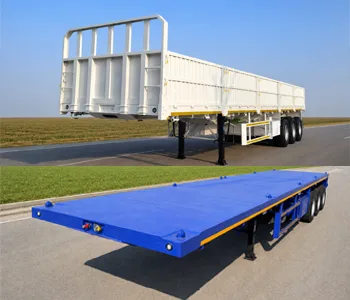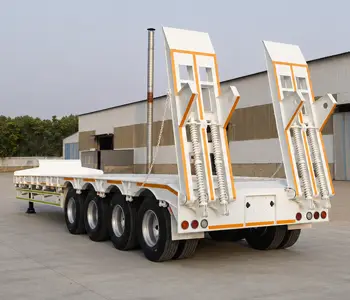
In heavy-duty transportation and material handling industries, choosing the right dump truck plays an important role in improving efficiency, safety, and operational performance. Among the most commonly used types are side dump trucks and rear dump trucks. Although both are designed for unloading bulk materials, they differ significantly in structure, working method, and application scenarios.
Understanding these differences helps construction companies, mining operators, and logistics businesses make better equipment decisions.
What Is a Side Dump Truck?
A side dump truck, also known as a side unloading trailer, is designed to unload materials from the side of the vehicle. The body is hinged at the rear and uses a side tipping mechanism to discharge cargo efficiently.
Side dump trucks are especially suitable for:
- Unloading without repositioning the truck
- Working in narrow or limited-space environments
- Transporting bulk materials such as soil, gravel, coal, and construction aggregates
One of the biggest advantages of side dump trucks is their fast unloading speed. When the unloading area is located beside the transport route, they significantly improve operational efficiency.
What Is a Rear Dump Truck?
A rear dump truck, also known as a traditional tipper truck, uses a rear tilting mechanism to unload materials. The hinge is located in the middle of the body, and materials are discharged from the back.
Rear dump trucks are widely used in:
- Large construction projects
- Road building
- Waste management and bulk material transport
They are commonly chosen for operations where vehicles can easily reverse into the unloading position and dump materials in a designated area.

Design and Working Principle Differences
The key difference between side dump and rear dump trucks lies in their mechanical structure.
- Side Dump Truck: The body rotates sideways around a rear hinge, allowing materials to be discharged to one side.
- Rear Dump Truck: The body lifts from a central hinge, allowing materials to fall directly from the back.
Side dump trucks often require a more complex hydraulic system to control the side-tipping movement, while rear dump trucks use a more traditional and simpler lifting mechanism.
Operational Efficiency
Efficiency is one of the most important factors when choosing between the two types:
- Side Dump Trucks:
Offer faster unloading with minimal repositioning of the vehicle, saving time and reducing fuel consumption. - Rear Dump Trucks:
Provide a simple unloading process when the truck can easily reverse into the unloading site.
Maneuverability and Working Space
Working environment has a major influence on equipment selection:
- Side Dump Trucks:
Perform well in narrow or restricted spaces where reversing is difficult or impossible. - Rear Dump Trucks:
More suitable for open areas where vehicles can easily back into position.
Applications Across Industries
Different industries prefer different dump truck types:
- Side Dump Trucks:
Commonly used in urban construction, mining operations, and space-limited environments. - Rear Dump Trucks:
Widely used in large-scale construction, road projects, and waste management applications.
Safety Considerations
Safety is critical in heavy equipment operations:
- Side dump trucks require careful control to prevent material spillage outside designated areas during tipping.
- Rear dump trucks require standard safety measures such as secure cargo handling and clear rear visibility during unloading.
Maintenance and Durability
Both types are designed for heavy-duty use, but maintenance needs differ:
- Side Dump Trucks:
Require more frequent inspection of hydraulic systems and side-tipping mechanisms. - Rear Dump Trucks:
Require routine checks of suspension systems and rear lifting components.
Cost and ROI
Cost differences also influence purchasing decisions:
- Side dump trucks usually have higher initial costs due to more complex mechanisms.
- Rear dump trucks are generally more economical but require more space for operation.
Conclusion
Choosing between a side dump truck and a rear dump truck depends on working conditions, space limitations, safety requirements, and budget considerations.
Side dump trucks are ideal for narrow and space-constrained environments with faster unloading needs, while rear dump trucks are better suited for large-scale operations with simple unloading requirements.
Understanding these differences helps businesses improve efficiency, reduce operating costs, and select the most suitable heavy-duty transport solution.