In the transportation and logistics industry, choosing the right vehicle is essential for improving efficiency, reducing operating costs, and ensuring safe cargo delivery. Semi-trailers and trailers are both widely used for cargo transportation, but they are different in structure, loading capacity, application, maneuverability, safety performance, and maintenance cost.
Understanding these differences can help fleet owners, logistics companies, transport contractors, and cargo operators select the most suitable equipment for their business needs.
What Is a Semi-Trailer?
A semi-trailer is a type of trailer without a front axle. Its front part is supported by a tractor truck through a fifth wheel coupling system. Because part of the trailer’s weight is carried by the tractor, a semi-trailer usually has stronger load-bearing capacity and better performance in long-distance transportation.
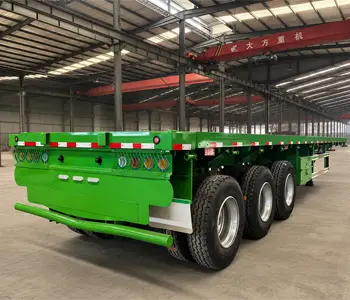
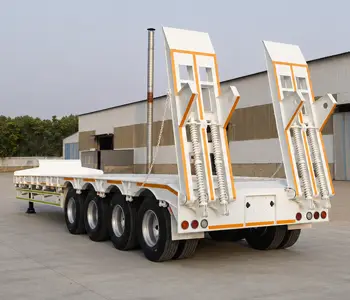
Semi-trailers are commonly used for heavy-duty and bulk cargo transport. According to different cargo types, they can be designed as flatbed semi-trailers, lowbed semi-trailers, side wall semi-trailers, fence semi-trailers, dump semi-trailers, container semi-trailers, tanker semi-trailers, and refrigerated semi-trailers.
In general, semi-trailers are longer and stronger than ordinary trailers. They are suitable for transporting containers, steel products, construction machinery, bulk materials, oversized equipment, and other heavy cargo.

What Is a Trailer?
A trailer, also known as a full trailer, is designed with both front and rear axles. Unlike a semi-trailer, it can support its own weight independently without relying on the tractor to carry its front section.
Because of its simpler structure, a full trailer is usually more suitable for light-duty or medium-duty cargo transportation. It is often used for short-distance transport, local delivery, regional logistics, or special cargo movement within a smaller operating area.
Compared with semi-trailers, full trailers generally have lower purchase and maintenance costs. However, they may not be the best choice for long-distance heavy-duty transport.

Main Differences Between Semi-Trailers and Trailers
The first major difference is the structure. A semi-trailer needs a tractor truck for front-end support, while a full trailer has its own front and rear axles. This structural difference directly affects load capacity, driving performance, and application scenarios.
The second difference is transportation distance. Semi-trailers are widely used for long-distance logistics because they can carry heavier loads and offer better efficiency for highway transportation. Full trailers are more commonly used for short-distance or regional transport.
The third difference is cargo capacity. Semi-trailers are usually designed for heavier cargo and more demanding working conditions. Full trailers are more suitable for lighter cargo or medium-duty transportation tasks.
Maneuverability is also an important factor. Semi-trailers usually have a smaller turning radius and are easier to operate in narrow spaces, especially when reversing or loading in factories, ports, warehouses, and logistics yards. Full trailers may have a larger turning radius, which can make them less convenient in complex operating environments.
Safety and stability should also be considered. Semi-trailers can be equipped with advanced safety systems such as ABS and ESC to improve road safety. Full trailers have an independent structure and a relatively low center of gravity, which can provide stable performance in some transport conditions.
Cost and Maintenance
Semi-trailers usually have a higher purchase cost because their structure is stronger and more complex. Components such as the fifth wheel connection, reinforced chassis, suspension system, and specialized cargo platform may require more professional maintenance.
However, for companies that handle heavy cargo, long-distance transport, or high-frequency logistics operations, semi-trailers can provide better long-term value. Their larger loading capacity and wider application range can help improve transport efficiency and reduce cost per trip.
Full trailers are generally easier and cheaper to maintain. With fewer complex components, they are a practical choice for customers who mainly transport light cargo over shorter distances.
How to Choose the Right One?
The choice between a semi-trailer and a trailer depends on your actual transportation needs. If your business mainly focuses on heavy cargo, long-distance logistics, construction machinery, containers, or bulk material transport, a semi-trailer is usually the better choice.
If your transportation task is mainly short-distance, light-duty, or regional cargo delivery, a full trailer may be more economical and easier to operate.
Before purchasing, buyers should consider cargo type, cargo weight, transport distance, road conditions, loading method, maintenance cost, and long-term operating efficiency.
Zhonglu Trailer: Reliable Transport Solutions for Global Customers
Liangshan Zhonglu Special Vehicle has been committed to providing reliable and innovative transportation solutions for global customers. With strong production capacity, factory-direct supply, and global export experience, Zhonglu Trailer offers a wide range of semi-trailers and special vehicles for different industries.
With an annual output of more than 8,000 vehicles, Zhonglu Trailer focuses on product durability, practical design, and cost-effective solutions. Whether customers need flatbed semi-trailers, lowbed semi-trailers, dump semi-trailers, fence semi-trailers, or customized special vehicles, Zhonglu can provide professional support according to real transport requirements.
Choosing the right trailer is not only about buying a vehicle. It is also about improving efficiency, reducing costs, and building a more reliable transport operation.
Zhonglu Trailer is ready to be your long-term partner in global transportation solutions.